How AI Resume Builders Work (And How to Use One)
An AI resume builder takes the experience you enter and rewrites it into structured, achievement-focused bullet points, then matches that wording against a job description. It should not invent employers, titles or dates. Employer sentiment is mixed, but the consistent finding across surveys is that what gets rejected is generic output, not AI involvement.
AI-assisted resume writing has gone from a novelty to standard practice in a few years. A 2026 Resume Genius survey of US job seekers found 38 percent had used AI tools to help with job applications, and among that group, 59 percent used it specifically to write their resume. Other surveys put overall AI usage in job applications considerably higher, sometimes above 60 or 70 percent, depending on how broadly "using AI" is defined. The numbers vary by study, but the direction doesn't: this is now common, not unusual.
What's less understood is what these tools actually do, where they help, where they can hurt you, and how employers really feel about resumes that had AI involved in writing them.
What an AI Resume Builder Actually Does
At a basic level, an AI resume builder takes information you provide, your work history, education, skills, and sometimes a rough description of what you did in each role, and helps turn it into clearer, more professional writing. The better tools do a few specific things well:
Improving weak phrasing. Turning a plain description like "helped with customer support tickets" into something more specific and results-oriented, without inventing details you didn't provide.
Structuring and formatting. Placing your information into a layout with standard sections and headings, which matters both for how a human reads it and how an applicant tracking system parses it. Our guide to how ATS systems work covers why that structure matters.
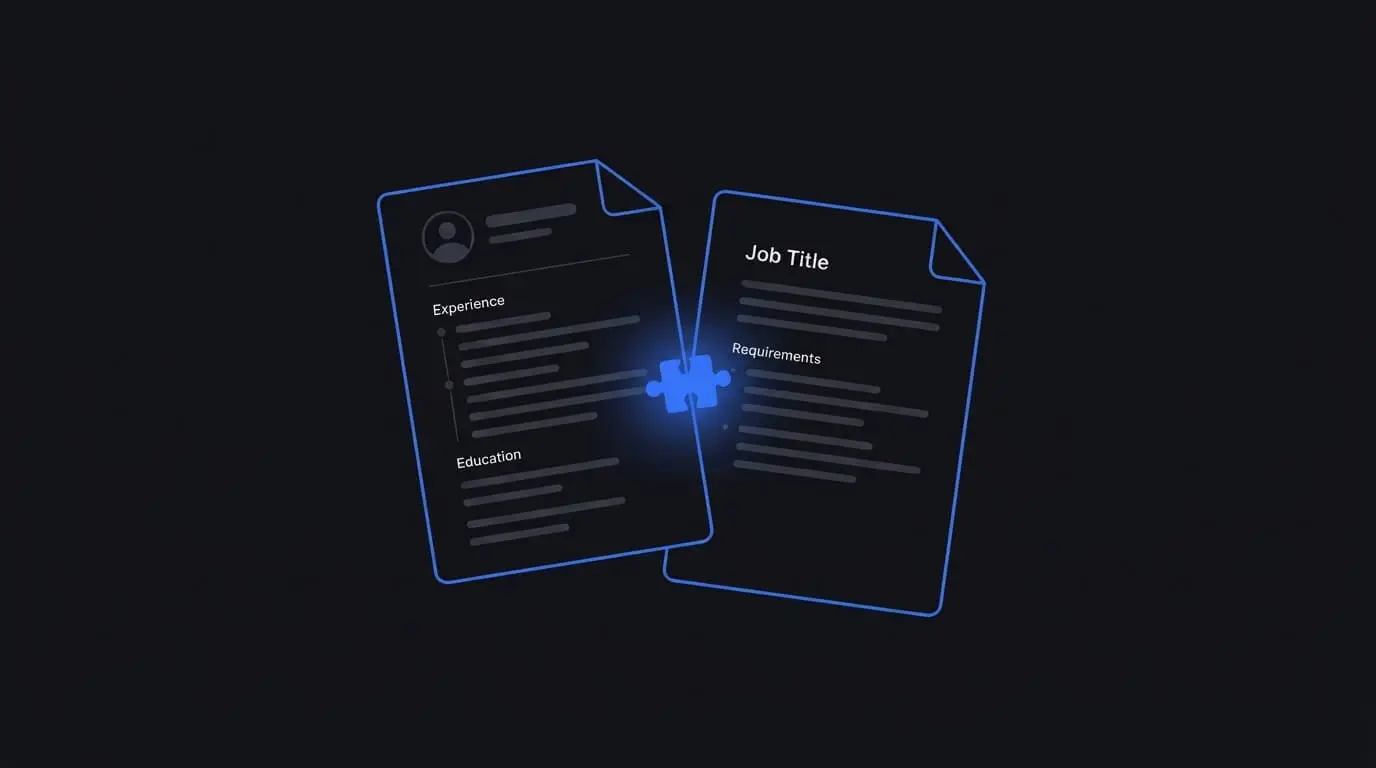
Job-specific tailoring. Reading a job description you paste in and identifying which of your existing skills and experience are most relevant to that specific posting, then helping bring that experience forward. This is covered in depth in our guide to tailoring your resume.
What a well-built AI resume tool should not do is invent experience, employers, or accomplishments you never provided. That distinction, between improving your wording and fabricating your history, is the most important thing to check before trusting any tool with something as consequential as a job application.
Do Employers Actually Accept AI-Written Resumes?
This is genuinely more nuanced than a yes or no answer, and it's worth being honest about the mixed picture.
On one hand, AI use in hiring itself is now widespread. Industry surveys put the share of companies using some form of AI in their recruitment process well above half, with resume screening being one of the most common applications. In that sense, an AI-assisted resume is being read, at least in part, by AI on the other side too.
On the other hand, employer sentiment toward AI-written resumes specifically is mixed. Some surveys report that a meaningful share of hiring managers say they'd reject a resume that reads as generic or clearly AI-generated without personalization, while other data suggests hiring managers themselves increasingly use AI tools in their own screening process. The consistent theme across most of this research isn't that AI use is rejected outright, it's that generic, unpersonalized output is the problem, regardless of whether AI was involved in producing it.
The practical takeaway: the risk isn't using AI to help write your resume, it's submitting something so generic it could describe anyone. A resume that accurately and specifically reflects your real experience, whether AI helped word it or not, doesn't carry that risk.
How to Use AI to Write a Resume Without Losing Your Voice
Start with your own information, not a blank prompt. Tools that ask you to describe your actual experience, rather than generating a generic resume from a job title alone, produce results that are both more accurate and more personalized.
Review every suggested change. Good AI resume tools show you the original phrasing next to the suggested rewrite, so you can accept, edit, or reject each one individually rather than accepting a wholesale rewrite you haven't actually read closely.
Watch for invented specifics. If a suggested rewrite includes a number, a tool name, or an outcome you didn't provide, don't accept it as-is. This happens more with general-purpose chat tools used without guardrails than with resume-specific tools built to only reword what you enter, but it's worth checking either way.
Keep the parts that already sound like you. If a section of your original resume is already clear and specific, there's no obligation to run everything through AI just because the option exists. Use it where it genuinely helps.
Tailor per application rather than generating once and reusing everywhere. The value of AI tailoring drops significantly if the same AI-generated resume gets sent to every posting without adjustment, which defeats the purpose covered in our tailoring guide.
AI Resume Builder vs. Using ChatGPT Directly
A common question is whether a dedicated AI resume builder offers anything a general-purpose chat tool like ChatGPT doesn't. The practical differences usually come down to a few things:
- Structure and templates. A dedicated resume tool typically outputs directly into a formatted, ATS-compatible layout, rather than plain text you then have to format yourself.
- Guardrails against fabrication. Purpose-built resume tools are more likely to be designed to only reword what you provide, whereas a general chat tool given a loose prompt can fill gaps with plausible-sounding but invented details if you're not careful with how you prompt it.
- Job-description matching built in. Dedicated tools often include a specific tailoring step designed around comparing your resume to a posting, rather than requiring you to manually copy-paste and prompt for that comparison each time.
- Export and design options. Multiple template designs and a direct, correctly formatted PDF export are typically built into dedicated tools, saving a separate formatting step.
Neither approach is inherently wrong, and a careful, experienced user can get good results from a general chat tool with the right prompting. A purpose-built tool mainly removes the need to know what the right prompting looks like.
What This Looks Like in Practice
Get AI Resume is built around the principle described above: you provide your real experience, either by entering it directly or uploading an existing resume, and the AI assistant, Remi, improves the wording and helps tailor it to a specific job description without adding anything you didn't state. Job titles, employers, and dates come from what you actually enter and are preserved as-is. It's free to start, includes 48 ATS-compatible template designs, and exports a polished PDF once you're ready.
Frequently Asked Questions
Is it okay to use AI to write my resume? Yes, for most job seekers. The distinction that matters is between AI that improves your wording and AI that invents your experience. As long as the final content accurately reflects your real background, using AI to help write it is widely accepted.
Can employers tell if my resume was written by AI? Sometimes, particularly when the output is generic and could describe almost anyone. A resume that's specific to your actual experience, with real detail and accurate numbers, is much harder to identify as AI-assisted and, more importantly, is simply a stronger resume regardless of how it was written.
Will an AI resume builder make up experience I don't have? It shouldn't, if it's built correctly. Tools designed to only reword information you provide, rather than generate content from a job title or prompt alone, keep the factual content under your control. It's still worth reviewing every AI suggestion before accepting it.
What's the difference between an AI resume builder and a resume template? A template is a fixed design you fill in manually. An AI resume builder actively helps write and improve the content itself, in addition to providing formatting, and can tailor that content to a specific job description.
Do I still need to proofread a resume an AI helped write? Yes. AI-assisted writing reduces the effort of drafting, but a final read-through, ideally reading it aloud, catches errors and phrasing that doesn't sound like you, which matters both for accuracy and for how natural the final resume reads.