How to Write a Resume in 2026: The Complete Guide
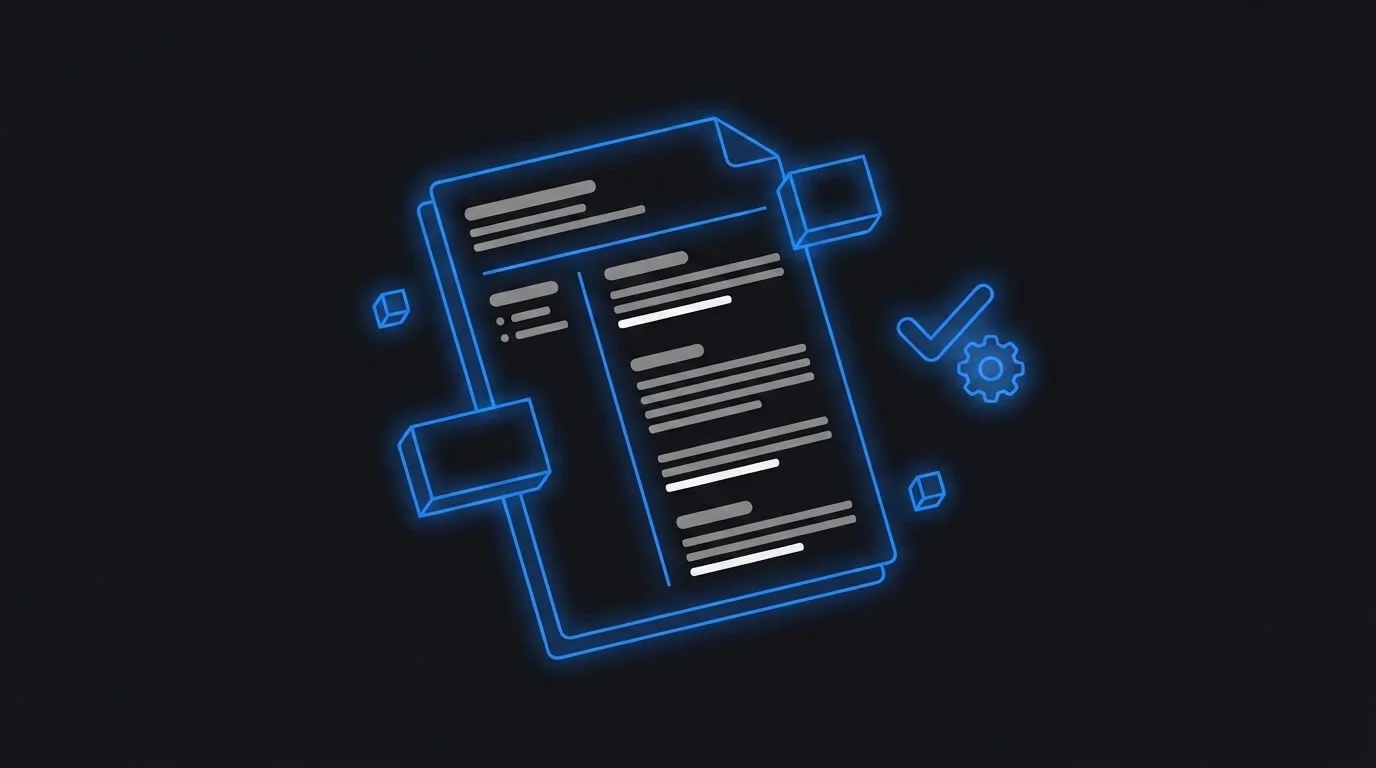
Write a resume in reverse-chronological order: a brief summary at the top, then each role with three to five achievement bullets, then education and a focused skills list. Use a single-column layout with standard section headings, and keep it to one page until you have around ten years of relevant experience.
A good resume is not a list of everything you have ever done. It is a short, well-organized argument for why you are worth interviewing, built around the specific job you are applying to. Most resumes fail not because the person lacks the experience, but because that experience is buried in vague language, poor structure, or a format that a recruiter or an applicant tracking system struggles to read.
This guide walks through every part of a resume, in the order a recruiter actually reads it, with specific wording examples you can adapt.
Start With the Right Structure
Recruiters scan before they read. Research from The Ladders' eye-tracking study, one of the most widely cited studies on this topic, found an average initial scan of around 7.4 seconds before a recruiter decides whether to keep reading. Newer studies put the number anywhere from 6 to 30 seconds depending on the role and how many applications the recruiter is working through. The exact number matters less than the takeaway: your structure has to work at a glance, not just on close reading.
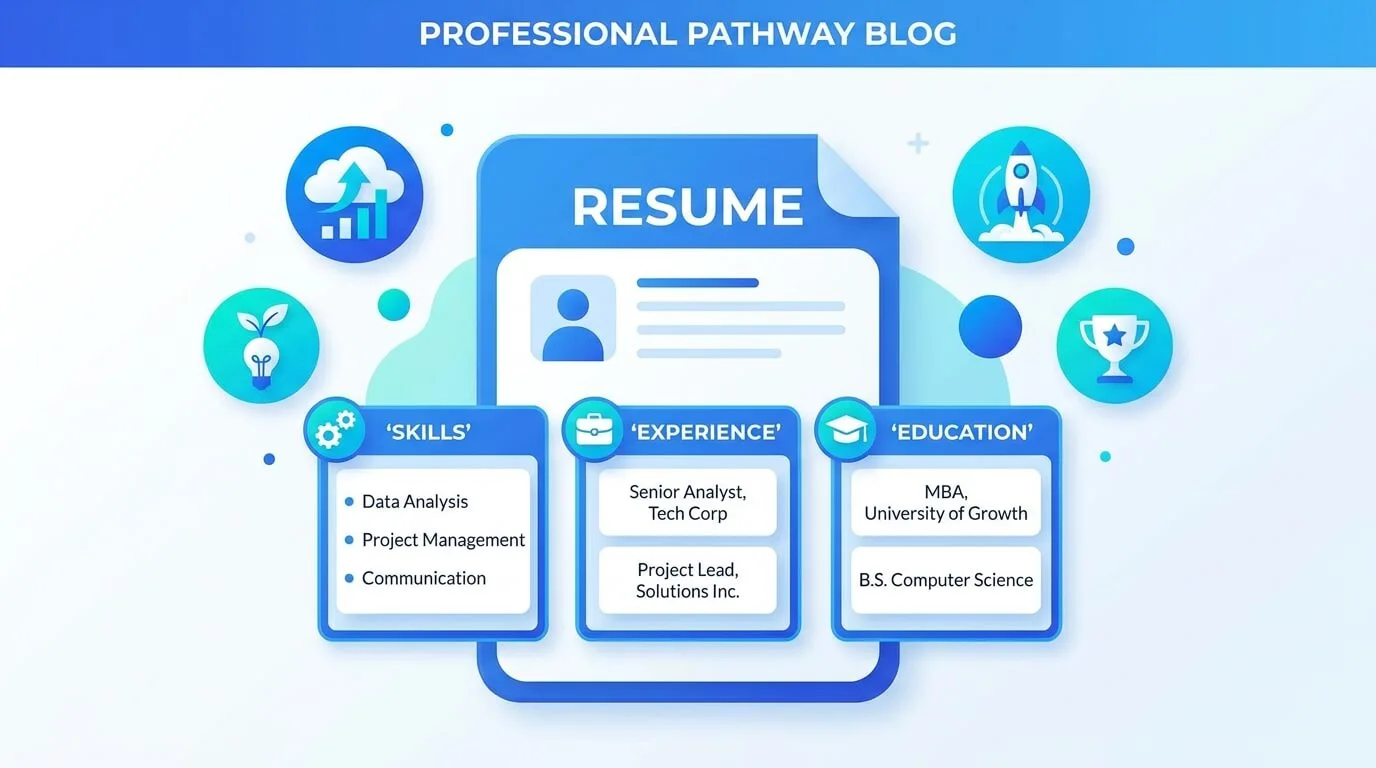
A standard, effective resume structure looks like this:
- Contact information: name, phone, email, city (full street address is unnecessary), and a LinkedIn URL if you keep it updated
- Summary or headline: two to three lines, optional but useful
- Work experience: most recent first, with bullet points under each role
- Skills: a short, relevant list, not a wall of buzzwords
- Education: degree, institution, and dates
- Optional sections: certifications, projects, languages, volunteer work, depending on relevance
Keep this in a single column. Multi-column and heavily designed layouts look appealing but often perform worse, both because applicant tracking software can misread them and because a recruiter's eye has to work harder to follow a non-linear layout during that first fast scan.
Writing a Resume Summary That Isn't Empty
A resume summary should say what you do, at what level, and what you're good at, in language specific enough that it couldn't apply to anyone else in your field. Compare these two:
Weak: "Hardworking professional with strong communication skills seeking a challenging opportunity."
Stronger: "Marketing coordinator with four years of experience running paid social campaigns for e-commerce brands, with a focus on lowering customer acquisition cost."
The first sentence could describe almost anyone. The second one immediately tells a recruiter your role, your experience level, your industry, and what you're specifically good at. If you're early in your career and don't have much to summarize yet, it's fine to skip this section entirely rather than pad it with generic phrasing.
The Work Experience Section: Where Most Resumes Lose Points
This is the section that actually gets read closely, and it's also where vague writing does the most damage. The most common mistake is describing duties instead of results.
Duty-based (weak): "Responsible for managing social media accounts and creating content."
Result-based (stronger): "Grew Instagram following from 4,000 to 22,000 in eight months through a consistent short-form video schedule."
A simple way to fix a duty-based bullet is to ask what happened because you did that task. "Managed inventory" becomes "Reduced stockouts by 30% by rebuilding the weekly inventory count process." Not every bullet will have a clean number attached, and that's fine, but aim for at least half your bullets to include some measurable outcome: a percentage, a dollar figure, a team size, a timeline.
Keep each role to three to five bullet points. A ten-bullet list under one job reads as unfocused and buries your strongest points among your weakest.
The Skills Section: Specific, Not Exhaustive
List skills that are genuinely relevant to the job you're applying for, not everything you've ever used. A software engineer's skills section listing "Python, Microsoft Word, teamwork, problem-solving" signals padding rather than expertise. A tighter list, matched to what the job actually asks for, reads as more credible and is also more useful for keyword matching if your resume goes through an applicant tracking system before a person sees it.
Education and Optional Sections
For most people with a few years of work experience, education can be brief: degree, school, and graduation year, nothing more. Recent graduates with limited work history can expand this section with relevant coursework, honors, or academic projects to fill the gap.
Certifications, languages, and volunteer work are worth including only when they're relevant to the role or add something a hiring manager would actually weigh. A certification directly tied to the job is worth a line. A loosely related hobby project usually isn't, unless you're early career and building out thin experience.
Formatting Choices That Actually Matter
- Length: one page for early-career candidates, up to two pages once you have ten or more years of relevant experience. There's no hard rule enforced by any system, but recruiters reading dozens of resumes a day appreciate density over length.
- Font: a standard, readable font like Calibri, Arial, or Georgia at 10 to 12 point size. Decorative fonts can look distinctive but often render poorly, both visually and when parsed by hiring software.
- File format: save as a PDF with a real text layer, not a scanned image, or a .docx file. Avoid formats like .pages that not every system can open.
- Consistency: the same date format, the same bullet style, and the same heading style throughout. Small inconsistencies are one of the fastest ways a resume looks unpolished on a quick scan.
For a deeper breakdown of exactly how applicant tracking systems read your resume and which formatting choices genuinely affect that, see our full guide to ATS and resume screening.
Tailor Every Resume to the Job
A resume written to apply broadly to "any marketing role" is weaker than one written for a specific posting, even when the underlying experience is identical. Job postings tell you almost exactly what a company is screening for: the skills listed, the tools named, the language used to describe the role. Matching that language, honestly and where it reflects your real experience, makes your resume both easier for a recruiter to say yes to and easier for an applicant tracking system to surface when a recruiter searches by keyword.
This doesn't mean rewriting your whole work history for every application. It means adjusting which of your real accomplishments you lead with, and using the same terms the posting uses when your experience genuinely matches. We cover this in detail in our guide to tailoring your resume for any job.
Common Mistakes Worth Double-Checking
- Objective statements instead of summaries. "Seeking a position where I can grow my skills" tells the reader nothing about what you offer. If you include this section at all, focus it on what you bring, not what you want.
- Unexplained employment gaps left as a mystery. A short, honest line is better than leaving a recruiter to guess.
- Inconsistent tense. Past roles in past tense, your current role in present tense, throughout.
- Generic file names like "Resume Final 2.pdf." Use your name: "FirstName-LastName-Resume.pdf."
- No proofreading pass out loud. Reading your resume aloud catches awkward phrasing and typos that silent reading tends to skip over.
Using AI to Help Write Your Resume
AI tools can genuinely help with the part most people find hardest: turning a plain description of what you did into a clearly written accomplishment. The distinction that matters is between AI that improves your wording and AI that invents your experience. A tool that only rewords what you actually provide, without adding employers, skills, or achievements you didn't state, keeps you in control of accuracy while removing the blank-page problem.
Get AI Resume works this way: you enter your real experience or upload an existing resume, and the AI improves how it's written and helps tailor it to a specific job description, without fabricating anything you didn't provide. It's free to start, includes 48 template designs built with ATS-compatible formatting, and lets you export a polished PDF once you're happy with it.
Frequently Asked Questions
How long should a resume be? One page for most early and mid-career candidates. Two pages is reasonable once you have significant, relevant experience to include, generally ten or more years. Length matters less than whether every line earns its place.
Should I include a photo on my resume? In the US, UK, and most English-speaking job markets, no. It's not expected and can introduce unconscious bias in screening. Norms differ in some other countries, so check what's standard where you're applying.
Do I need a different resume for every job? Not a completely different resume, but yes, some tailoring for each application meaningfully improves your odds. At minimum, adjust the skills you lead with and the language you use to match the posting.
What's the difference between a resume and a CV? In the US and Canada, a resume is a short, tailored document (usually one to two pages), while a CV is longer and used mainly for academic, research, or international roles. In the UK, Ireland, and much of Europe, "CV" is used the way Americans use "resume."
Should I use a resume template? Yes, for most job seekers a clean template saves time and avoids formatting mistakes. Choose one with a single-column layout and standard section headings so both recruiters and applicant tracking systems can read it easily.
Is it okay to use AI to write my resume? Yes, as long as the final content accurately represents your real experience. Most employers care about clarity and accuracy, not which tools helped you draft it. Tools that only reword what you provide, rather than inventing experience, keep the result both efficient and honest.